
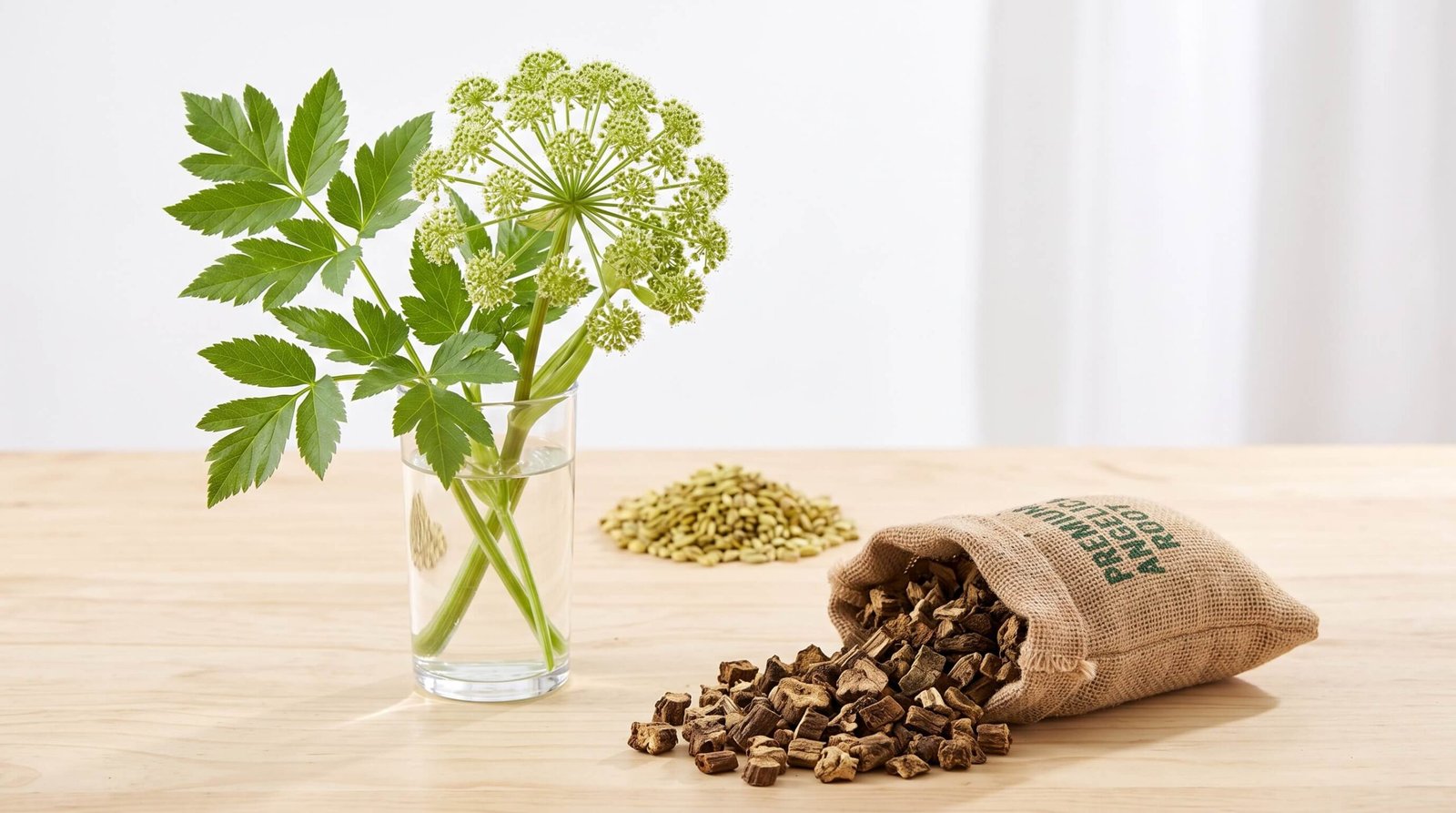
Angelica is a genus of about 60 species of tall biennial and perennial herbs in the family Apiaceae (the celery/carrot family). The most common species used medicinally and as a spice is Angelica archangelica (also known as Garden Angelica).
Key Characteristics:
-
Distinctive Appearance: It is a tall, robust plant, often reaching 3 to 9 feet (1 to 3 meters) in height. It has hollow purple stems, large compound leaves, and vast, umbrella-shaped clusters (umbels) of greenish-white or pale yellow flowers.
-
Aromatic: All parts of the plant (root, stem, leaves, seeds, and flowers) have a strong, sweet, pleasant aroma, often described as a mix of celery, licorice, and juniper.
-
Edible Stems: The young stems and leaf stalks are often candied and used as decoration in baking and confectionery (like angel cake) due to their bright green color when prepared.
-
Medicinal Uses: Traditionally, Angelica roots and seeds have been used in herbal medicine to aid digestion, treat respiratory issues, and alleviate digestive discomfort. The root is particularly valued for its bitter compounds and essential oils.
-
Culinary Spice: The seeds are sometimes used like anise or fennel seeds in cooking, baking, and as a flavoring in liqueurs and other beverages.
-
Bitter Root: The dried root of Angelica archangelica is an important ingredient in many traditional bitter liqueurs, including Gin, Benedictine, and Chartreuse.
-
Habitat: It prefers moist, cool climates and is often found growing along riverbanks or in mountainous regions.

Reviews
There are no reviews yet.