
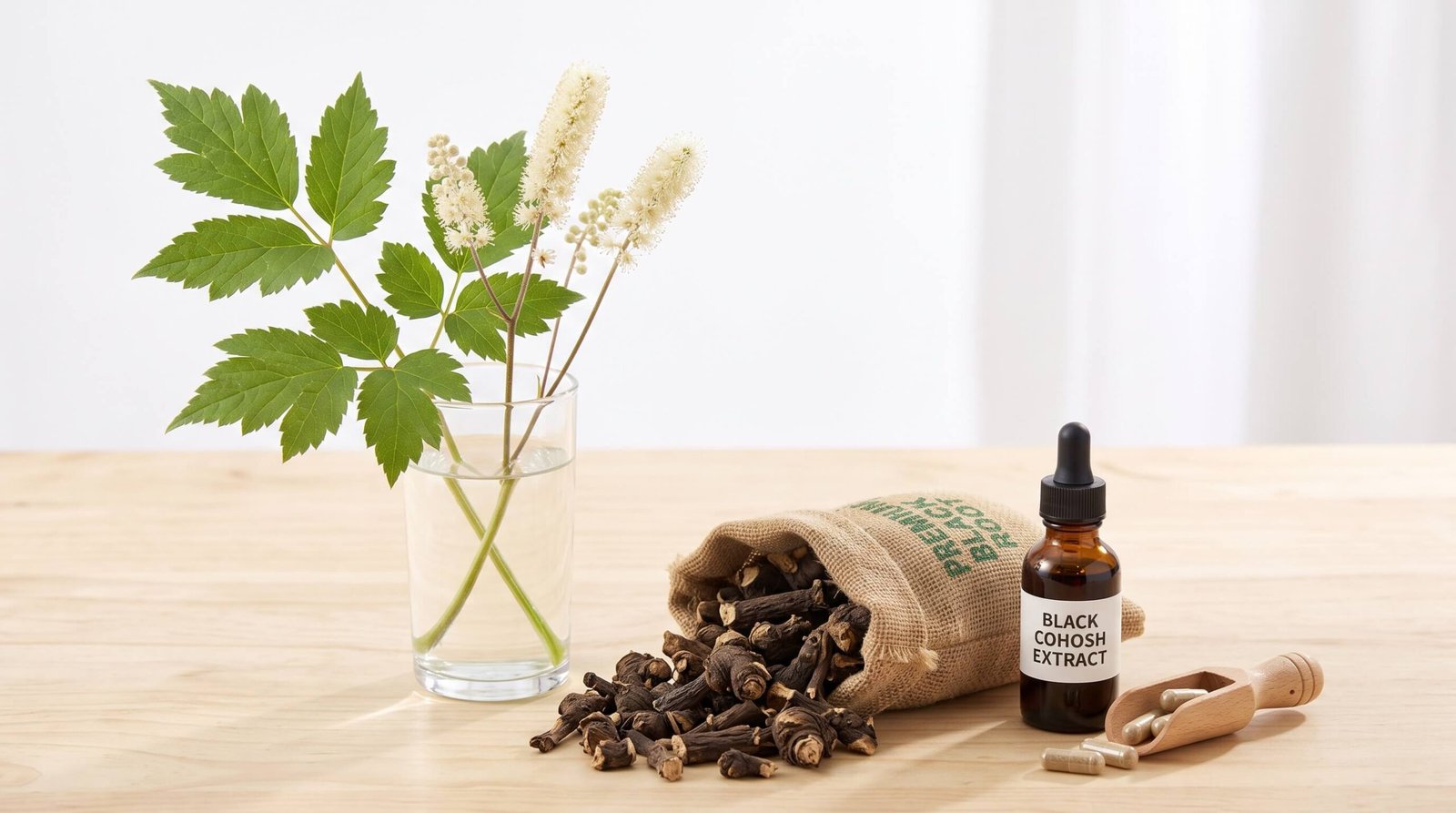
Black Cohosh (Actaea racemosa, formerly Cimicifuga racemosa) is a perennial herb native to eastern North America, especially woodlands. It is one of the most thoroughly studied and widely used herbal remedies, primarily valued for its effectiveness in managing symptoms associated with menopause and other hormonal imbalances in women.
Key Characteristics:
-
Menopausal Symptom Relief: Black cohosh is best known for reducing the frequency and severity of hot flashes, night sweats, sleep disturbances, and mood swings during menopause. It is often considered a natural alternative to hormone replacement therapy (HRT).
-
Active Compounds: The primary therapeutic effects are attributed to triterpene glycosides (such as actein and cimicifugoside) and various phenolic acids. Despite popular belief, modern research indicates it does not contain phytoestrogens, but rather works through complex interactions with the endocrine system, likely acting as a selective estrogen receptor modulator (SERM) and affecting serotonin pathways.
-
Distinctive Appearance: The plant is a striking woodland perennial, growing 4 to 8 feet (1.2–2.4 m) tall. In summer, it produces tall, slender racemes of small, fuzzy, cream-white flowers that have a faint, slightly unpleasant odor (which gave it the alternative name "bugbane").
-
The Power in the Roots: The thick, black, knotted rhizome and roots are the parts used medicinally. They are dark on the outside and fibrous, with a bitter taste.
-
Traditional Medicine: Historically, Indigenous peoples used the root to treat gynecological conditions, snakebites, and musculoskeletal pain (hence the name "cohosh," possibly a cognate for a word meaning "rough root").
-
Habitat: It thrives in moist, shaded, rich deciduous forests from Ontario to Georgia and west to Missouri.



Reviews
There are no reviews yet.