
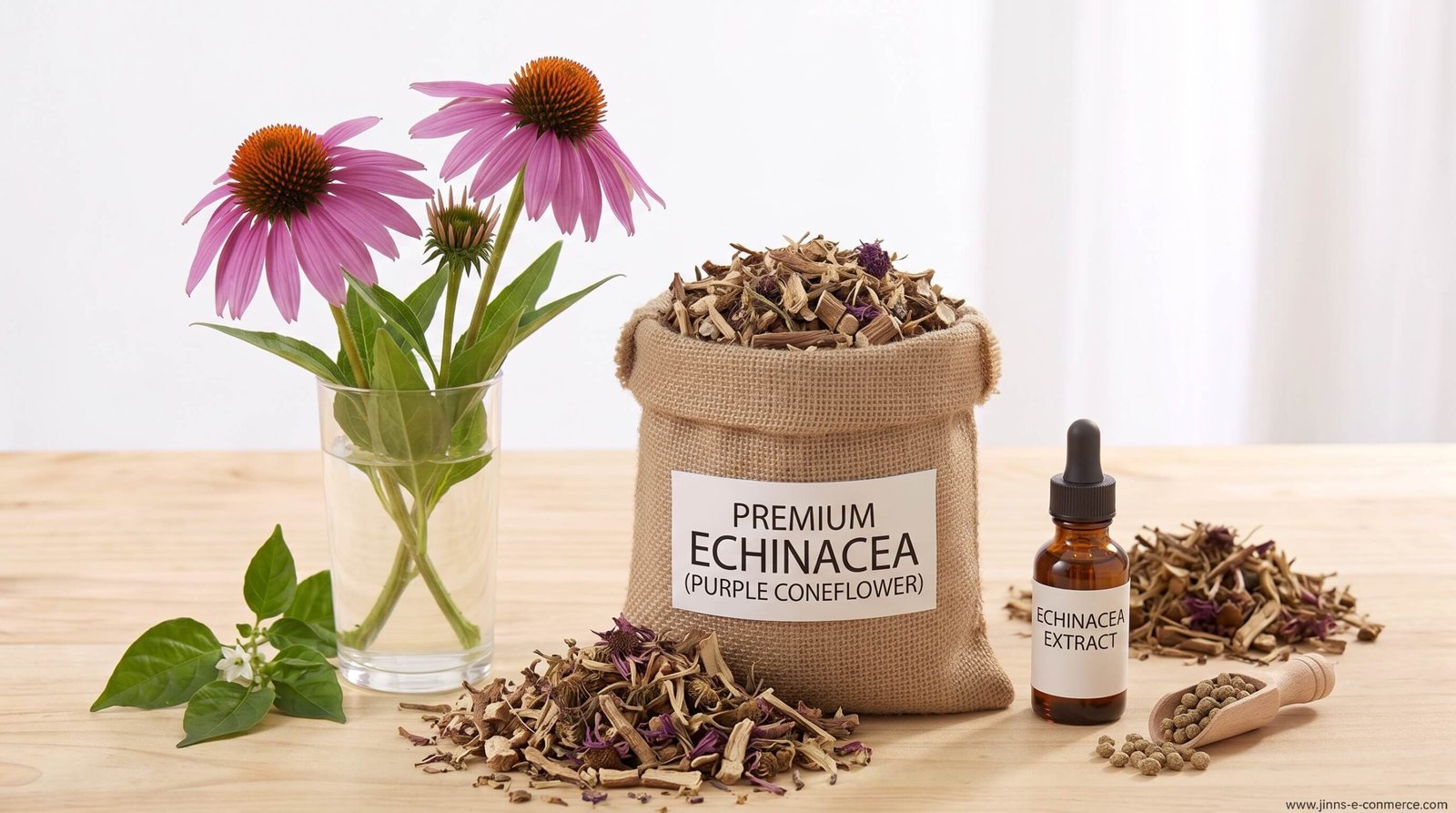
Echinacea, commonly known as purple coneflower, is a genus of herbaceous flowering plants in the daisy family (Asteraceae) native to eastern and central North America. It is widely recognized and used globally as a traditional herbal remedy to support immune function and help fight off infections like the common cold.
Key Characteristics:
-
Immune System Support: Renowned for its potential to stimulate the immune system, making it a popular natural supplement for preventing or shortening the duration of colds and respiratory tract infections.
-
Distinctive Cone-Like Center: Features a prominent, spiky, cone-shaped central disk surrounded by droopy ray florets, giving it the common name "coneflower" (derived from the Greek word echinos, meaning hedgehog).
-
Vibrant Flower Colors: While most commonly recognized for its bright purple to magenta petals, species vary and can display shades of pink, yellow, or white.
-
Rich Active Bioactive Compounds: Contains a diverse blend of active compounds, including alkamides, caffeic acid derivatives (such as chicoric acid), polysaccharides, and flavonoids, which contribute to its antioxidant and anti-inflammatory properties.
-
Multiple Plant Parts Used: Both the roots and above-ground aerial parts (leaves, stems, and flowers) of species like Echinacea purpurea, Echinacea angustifolia, and Echinacea pallida are utilized in commercial preparations.

superadmin_monticello –
test